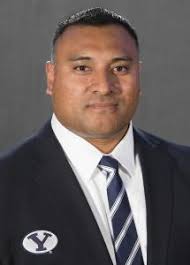
Breaking news:Kalani  sitake has announced his departure and flip to Texas tech over Alabama and Tennessee Vols…..
0
download (51)


If BYU’s second season in the Big 12 taught us anything, it is that predicting how the league race will go is a futile exercise.


Teams that were supposed to be good weren’t, and teams that were supposed to struggle — such as BYU — rose to the top of the standings. The finish was almost exactly the opposite of predictions, as BYU, Arizona State, Colorado and Iowa State tied for the regular-season championship with 7-2 records (only Iowa State was picked to finish in the top half of the league, among those schools) and expected contenders such as Utah, Arizona and Oklahoma State won a combined four conference games.

So any examination of BYU’s league schedule in its third season in the Big 12, a schedule that was released Tuesday morning, has to begin with the caveat that we really don’t know on Feb. 4 whether it will be extra difficult, fairly easy or somewhere in between

Speaking of in-between, the biggest shocker from the nine-game announcement is that BYU and Utah won’t play the rivalry game in November as a regular-season ender.


Rather, the Utes and Cougars will square off on Oct. 18 in Provo, right in the middle of the season. That’s a bummer. Sure, it is BYU’s homecoming game, but homecoming games are not a big deal anymore — even in Provo.


Looking on the positive side, at least the weather should be more favorable in October along the Wasatch Front. And the in-state game should get a prime TV slot.

Last year, the game was played at 8:30 p.m. on Nov. 9 in Salt Lake City, which wasn’t optimal. But it was better than this. The only true rivalry game in the Big 12 to be played on either Nov. 28 or Nov. 29 will be the Territorial Cup pitting Arizona State and Arizona. That’s a big fail on the part of the league.


The Baylor-TCU rivalry game is also on Oct. 18.


Hey Brett Yormark, play the rivalry games on rivalry weekend, and forget about spreading them out in an effort to provide compelling games weekly for the television partners.


Coincidentally, the Big 12 televised the schedule reveal and had Chief Football and Competition Officer Scott Draper on the show to discuss the schedule, but Draper was never asked the question that was on everybody’s mind: Why not play more rivalry games on rival

ry weekend?


There are many that believe BYU athletic director Tom Holmoe should have bought his way out of that game against the Pirates in Greenville, N.C., but he didn’t. East Carolina leads the series 2-1, and has won the last two matchups — 27-24 in Provo in 2022 and 33-17 in North Carolina in 2017.

BYU’s second bye week comes in Week 10, after the Cougars play at Iowa State on Oct. 25, and before they play at Texas Tech on Nov. 8. Optimally, the bye would come after the BYU-Utah game on Oct. 18.


Why?


Remember what happened last November, after the Cougars edged the Utes 22-21 in Salt Lake City? Both teams played uninspired football the following week, with BYU losing 17-13 at home to Kansas and Utah losing 49-24 at Colorado.


How difficult is this league schedule for BYU? It’s hard to tell at this point, but generally it does not appear insurmountable. The toughest games seemingly start with that mid-October game against the Utes — who will surely have revenge on their minds after the way last November’s game went — and continue from there.


The Oct. 25 game at Iowa State, the Nov. 8 game at Texas Tech and the Nov. 15 game at home against TCU — which always gives BYU fits — mark the most brutal stretch of the 2025 slate. Five of BYU’s opponents played in bowl games last year: Colorado, West Virginia, Iowa State, Texas Tech and TCU. Three of those are aw

ay games.

Leave a Reply

Your email address will not be published. Required fields are marked *

You may have missed

South Carolina Stars Joyce Edwards and Raven Johnson Earn Spots on Prestigious National Award Lists The success of the South Carolina Gamecocks women’s basketball program this season continues to gain national recognition, as standout players Joyce Edwards and Raven Johnson have both been named to major national award watch lists. The recognition highlights not only their individual excellence but also the continued dominance of the Gamecocks under legendary head coach Dawn Staley. For South Carolina, having multiple players recognized nationally reflects the program’s depth, talent, and winning culture. Throughout the season, both Edwards and Johnson have played key roles in keeping the Gamecocks among the top teams in the country. Joyce Edwards Emerging as a National Star Freshman forward Joyce Edwards has quickly become one of the most exciting young players in college basketball. Her inclusion on a national award watch list confirms what many fans and analysts have already noticed — Edwards is a rising star with a very bright future. Edwards has impressed with her versatility, scoring ability, and energy on both ends of the court. Despite being early in her college career, she has shown remarkable maturity in big games. Whether attacking the basket, finishing through contact, or contributing defensively, Edwards has consistently delivered impactful performances. Her development has been a major boost for South Carolina, providing the team with another dynamic offensive weapon. Under the guidance of Coach Dawn Staley, Edwards continues to grow each game, and national recognition is only reinforcing her growing reputation. Raven Johnson’s Leadership and Defense Recognized While Edwards represents the future of the program, veteran guard Raven Johnson continues to serve as one of the team’s emotional leaders. Johnson’s selection to a national award list reflects her impact as a playmaker, defender, and floor general. Johnson has been known for her defensive intensity, court vision, and ability to control the pace of the game. She plays a crucial role in South Carolina’s system, often guarding the opponent’s best perimeter player while also orchestrating the offense. Her leadership has been especially valuable in high-pressure moments. Teammates rely on her calm presence and basketball IQ, making her one of the most respected guards in the nation. Recognition of South Carolina’s Elite Program The national recognition for Edwards and Johnson further reinforces the reputation of South Carolina as one of the premier programs in women’s college basketball. Coach Dawn Staley has built a powerhouse that consistently produces elite players capable of competing for major awards. The Gamecocks have become known for developing talent that thrives both individually and within the team structure. Players are expected to defend, share the ball, and compete with relentless energy — qualities that Edwards and Johnson both display every time they step on the court. Looking Ahead As the season continues and the postseason approaches, both Joyce Edwards and Raven Johnson will remain central to South Carolina’s championship aspirations. Individual awards are impressive honors, but for the Gamecocks, the ultimate goal remains team success. If Edwards continues her rapid rise and Johnson maintains her steady leadership, South Carolina will remain one of the most dangerous teams in the country. And with national attention growing, the spotlight on these two Gamecocks stars will only get brighter. For South Carolina fans, the message is clear: the present is strong, and the future looks even brighter see more..