Norwich Fans: ‘He Can’t Be Missing While the Game Is Ongoing’ — Supporters Question Midfielder’s ‘Head Not Right…
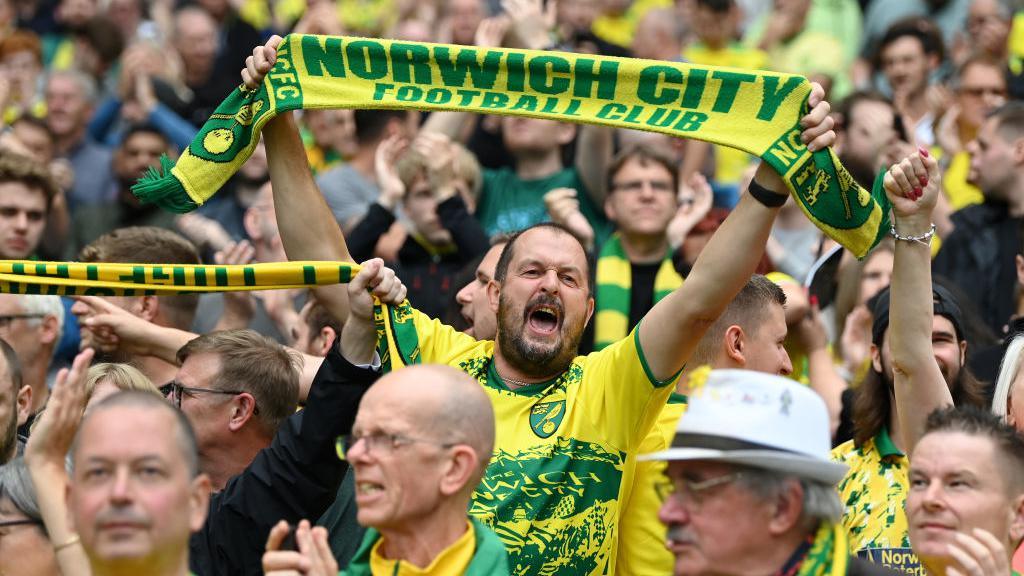
Norwich Fans: ‘He Can’t Be Missing While the Game Is Ongoing’ — Supporters Question Midfielder’s ‘Head Not Right’… Or Did Norwich Star Simply Go on Strike?
In football, there are moments that transcend tactics, formations, and statistics. They become stories—stories that divide supporters, fuel speculation, and linger long after the final whistle. Norwich City may have found themselves at the centre of one such moment after supporters began questioning the mysterious absence and apparent disengagement of one of the club’s midfielders.
The debate is as simple as it is explosive: Was the player’s mind elsewhere, or was his behaviour a subtle act of defiance?
For many Norwich supporters, the answer isn’t straightforward.
Across social media and fan forums, frustration has boiled over. Some fans insist that a player simply cannot disappear—physically or mentally—while a competitive match is unfolding.
“He can’t be missing while the game is ongoing,” became a recurring sentiment among supporters attempting to make sense of events that appeared increasingly unusual as the contest progressed.
The criticism, however, goes beyond one isolated performance. It touches on a much larger issue that continues to define modern football: Where does professionalism end, and personal circumstances begin?
A Body on the Pitch, But a Mind Elsewhere?
Footballers are often judged by what supporters can see.
A misplaced pass.
A lack of intensity.
An unwillingness to chase loose balls.
Within minutes, narratives begin to form.
Among sections of the Norwich fanbase, one explanation has gained traction—that the midfielder’s “head wasn’t right.” Whether that refers to uncertainty over his future, emotional fatigue, or simply a loss of concentration remains open to interpretation.
Elite football is increasingly recognised as a mental game as much as a physical one. Confidence can disappear overnight. Transfer rumours can alter focus. Personal issues rarely stay outside the dressing room, no matter how much clubs attempt to shield them.
Yet supporters rarely have access to those private realities.
Instead, they judge what unfolds across ninety minutes.
The Strike Theory
Then comes the more controversial suggestion.
Did the player effectively go on strike?
Modern football has witnessed its fair share of stars refusing to train, declining to play, or subtly reducing their commitment in pursuit of a transfer or improved contract terms.
It is a phenomenon supporters despise because it challenges the unwritten contract between player and club.
Fans invest emotionally and financially.
They expect commitment in return.
At present, however, there is no confirmed evidence that the Norwich midfielder deliberately refused to compete or intentionally withdrew from his responsibilities. The suggestion remains speculation driven largely by frustration and the unusual nature of the incident.
That distinction matters.
Football history is littered with examples of supporters reaching conclusions before the full facts emerged.
Football’s Biggest Invisible Battle
Perhaps the more fascinating question isn’t whether the midfielder went on strike.
Perhaps it’s why supporters immediately believed it was possible.
Modern football has become increasingly transactional.
Players move frequently.
Contracts are negotiated publicly.
Transfer speculation dominates headlines.
As a result, supporters have become conditioned to interpret unusual behaviour through the lens of potential exits.
Every absent player becomes a transfer target.
Every subdued performance becomes a lack of commitment.
Every silence becomes evidence of unrest.
Sometimes those assumptions prove correct.
Often they don’t.
Norwich’s Delicate Situation
For Norwich City, managing the narrative could prove almost as important as managing the player himself.
If concerns genuinely exist regarding the midfielder’s focus or wellbeing, the club must address them internally before speculation grows into a distraction for the squad.
If, on the other hand, there is a perfectly reasonable explanation behind the incident, clarity from the club could quickly extinguish rumours before they evolve into damaging headlines.
Silence in football rarely stays silent for long.
Supporters fill the gaps.
Social media amplifies them.
The truth often arrives last.
The Verdict
Football has always been driven by emotion, and Norwich supporters are entitled to question performances that fall below expectations. Their passion is what gives the game its identity.
But there is an important distinction between asking difficult questions and presenting speculation as fact.
The suggestion that the midfielder’s “head wasn’t right” reflects genuine concern among supporters.
The idea that he “went on strike” is, at this stage, just that—an unverified theory rather than an established conclusion.
Until more information emerges, the incident remains one of the more intriguing talking points surrounding Norwich City. Whether it proves to be the beginning of a transfer saga, a misunderstanding, or simply an off day for a player under pressure, only time will provide the answer.
For now, Norwich fans are left with uncertainty—and in football, uncertainty is often the spark that ignites the loudest debates.